


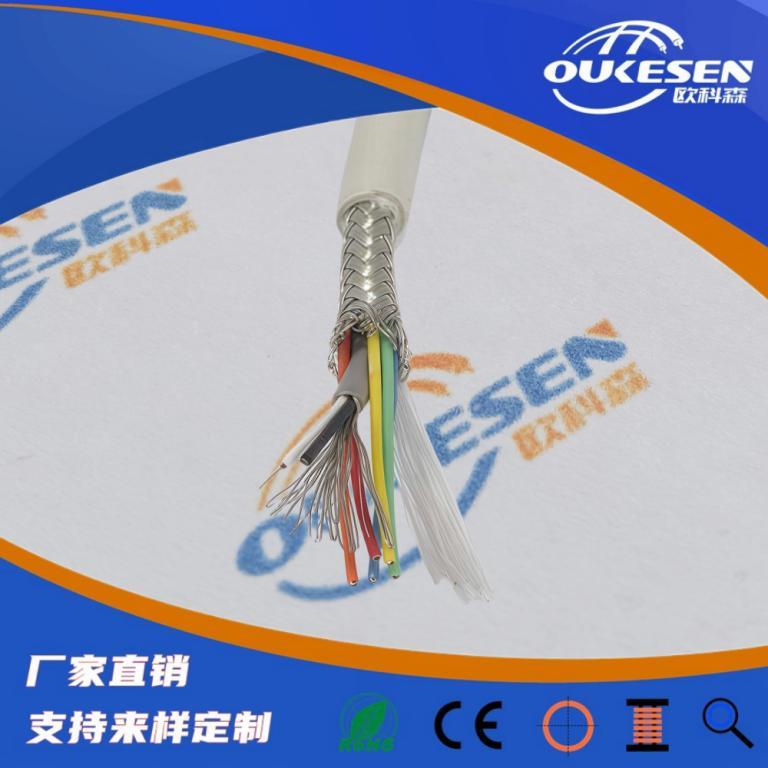
CE-certified European-standard signal data transmission cable LiYCY(TP)
Contact Info
- No. 1628, Suzhao Road, 200000
- 李工
- 18616280428
- oks-cable@qq.com
With the rapid development of modern industry and electronic technology, signal cables play an indispensable role in various fields such as communication, automatic control, and industrial equipment connection. As a company dedicated to manufacturing high-performance wire and cable products, Shanghai Oukesen Wire & Cable Co., Ltd. focuses on producing signal cables that meet EU standards and holds CE certification to ensure product quality and safety. In this article, we will conduct in-depth discussions from multiple aspects including the application scope of signal cables, installation methods and precautions, product materials and manufacturing processes, to help customers understand the importance of selecting the appropriate cable and share how to maximize its performance and service life.
I. Wide Application Scope of Signal Cables
Signal cables are key media for transmitting low-voltage, low-power signals, and are mainly used in industrial automation, communication equipment, security monitoring, intelligent buildings, medical equipment, and instrumentation. Specifically:
Industrial Automation: Equipment such as CNC machine tools, robots, and sensors require a large number of signal cables to transmit commands and feedback signals, effectively avoiding electromagnetic interference.
Communication Systems: In data centers, telephone exchanges, and optical fiber distribution systems, signal cables ensure stable data transmission and low error rates.
Security Monitoring: For video surveillance system signal transmission, cables reduce external interference and enable clear transmission of image and audio signals.
Intelligent Buildings: Automatic lighting, environmental monitoring, and building control systems widely use signal cables to connect sensing devices and control hosts.
Medical Equipment: High-precision medical devices have extremely high requirements for the stability of signal transmission and anti-interference ability.
From the above application scenarios, it can be seen that signal cables required by different fields have differences in design and performance requirements. European-standard signal cables meet strict European industrial standards, balance durability and safety while ensuring transmission quality, and are more suitable for modern high-standard application environments.
II. Correct Installation Methods for Signal Cables
When installing signal cables, attention should not only be paid to connection specifications but also to details to ensure cable performance and equipment safety. The following are key steps and suggestions during the installation process:
Route Planning: Reasonably plan the routing path according to the application environment and equipment layout to avoid tangling and excessive bending.
Select Appropriate Brackets and Trays: Ensure the cables are fixed stably and neatly to prevent mechanical damage.
Avoid Electromagnetic Interference Sources: Keep away from high-voltage cables, equipment motors, and other strong electrical interference sources as much as possible.
Lay According to Protection Requirements: When installing outdoors, consider waterproofing, UV resistance, and rodent prevention; add protective pipes if necessary.
Interface Construction: Ensure joints are firm and the shielding layer is fully grounded to reduce signal loss and interference.
Testing and Acceptance: After installation, conduct electrical performance and signal integrity tests to ensure no faults.
During installation, special attention should be paid to the bending radius of the cable. Generally, the bending radius of a signal cable should not be less than 8 times the outer diameter of the cable to avoid internal conductor damage and shielding layer rupture. In addition, avoid pulling the cable forcefully, as excessive force may cause internal conductor breakage.

III. Precautions for Using Signal Cables
Many users ignore some key operations during daily use, leading to reduced signal transmission quality or equipment failures. Key precautions include:
Avoid Long-Term Dragging and Heavy Pressure: The internal fine conductors of signal cables are thin, and excessive mechanical stress will affect transmission stability.
Prevent Joint Loosening: Especially the grounding joints of the shielding layer; loosening will cause failure and signal interference.
Avoid Long-Term Outdoor Use in Humid Environments: Unless a waterproof model is selected, humid environments easily cause conductor oxidation.
Regular Inspection: Especially for cables used in key equipment, regularly test resistance, capacitance, and signal integrity.
Avoid Laying with Strong-Current Cables: Prevent strong electromagnetic interference from affecting signal quality.
In addition to the above basic precautions, whether the shielding layer of the signal cable is complete and whether the grounding is standardized are key factors in judging transmission stability. Shanghai Oukesen Wire & Cable Co., Ltd. advises customers to reasonably select products suitable for the working environment to ensure long-term stable operation.
IV. Material Selection for Signal Cable Products
The performance of a signal cable is closely related to its materials. Shanghai Oukesen Wire & Cable Co., Ltd. carefully selects a variety of high-quality raw materials to ensure products meet EU CE certification requirements, mainly including:
| Component | Material | Features and Functions |
|---|---|---|
| Conductor | High-Purity Oxygen-Free Copper | Excellent electrical conductivity, low loss, high tensile strength, ensuring signal transmission efficiency. |
| Insulation Layer | High-Density Polyethylene or Polyvinyl Chloride (PE/PVC) | Good insulation performance, excellent temperature resistance, meeting environmental protection standards. |
| Shielding Layer | Aluminum Foil + Tinned Copper Braided Mesh | Effectively blocks electromagnetic interference, reduces signal crosstalk, and ensures clear signals. |
| Sheath | Flame-Retardant Polyvinyl Chloride | Strong fire resistance, wear-resistant and corrosion-resistant, extending service life. |
Selecting the appropriate material not only affects the performance of the cable itself but also relates to equipment safety and system reliability. Currently, many enterprises in the industry use low-cost materials that struggle to meet the strict requirements of modern electronic equipment for signal quality. Shanghai Oukesen Wire & Cable Co., Ltd. strictly controls quality and ensures excellent materials from the source to provide customers with high-quality product guarantees.
V. Manufacturing Process of High-Quality Signal Cables
The manufacturing process determines the overall performance and durability of signal cables. Shanghai Oukesen Wire & Cable Co., Ltd. implements a strict quality control system during production and combines advanced processes to ensure every cable meets:
Precision Wire Processing: Advanced wire drawing equipment is used to ensure uniform conductor specifications and stable wire diameters.
Uniform Insulation Coating: High-precision coating technology ensures consistent insulation layer thickness and prevents signal leakage.
Multi-Layer Braiding Composite: A combination of aluminum foil and tinned copper braided mesh is used to improve braiding effect and flexibility.
High-Temperature and Fire-Resistant Sheath Forming: Flame-retardant materials are extruded at high temperatures to ensure sheath stability and weather resistance.
Full-Automated Testing: On-line equipment tests conductor resistance, insulation resistance, and braiding integrity to eliminate unqualified products.
In addition, we use production materials and processes that comply with EU environmental protection standards to ensure that cable products not only have excellent performance but also environmental protection characteristics. The high-quality manufacturing process brings stable product performance, which is extremely important for reducing maintenance costs of production equipment and also creates a good user experience for customers.
Conclusion and Purchase Advice
Selecting high-quality signal cables is the foundation for ensuring the reliable operation of industrial equipment and electronic systems. Adhering to the principle of "quality first, customer foremost", Shanghai Oukesen Wire & Cable Co., Ltd. produces braided signal cables that meet European standards and CE certification, providing customers with high-performance and safe product solutions. Whether in industrial automation, communication systems, intelligent buildings, or security monitoring fields, we can match the appropriate product for you.

It is recommended that customers carefully evaluate the use environment and technical requirements before purchasing, and select signal cables with appropriate materials, braiding types, and specifications. Reasonable installation and maintenance are also indispensable. If you need guidance or customization services, Shanghai Oukesen Wire & Cable Co., Ltd. welcomes your inquiry and cooperation. Use high-quality cables to ensure smooth communication and control, so that your project starts with signal transmission.
Oukesen signal cables are mainly divided into the following types for customers to choose from:
1. PVC Data Signal Transmission Cables
2. PUR Polyurethane Data Signal Transmission Cables
| Electrical Equipment & Supplies/Power Distribution & Transmission/Cables | |


